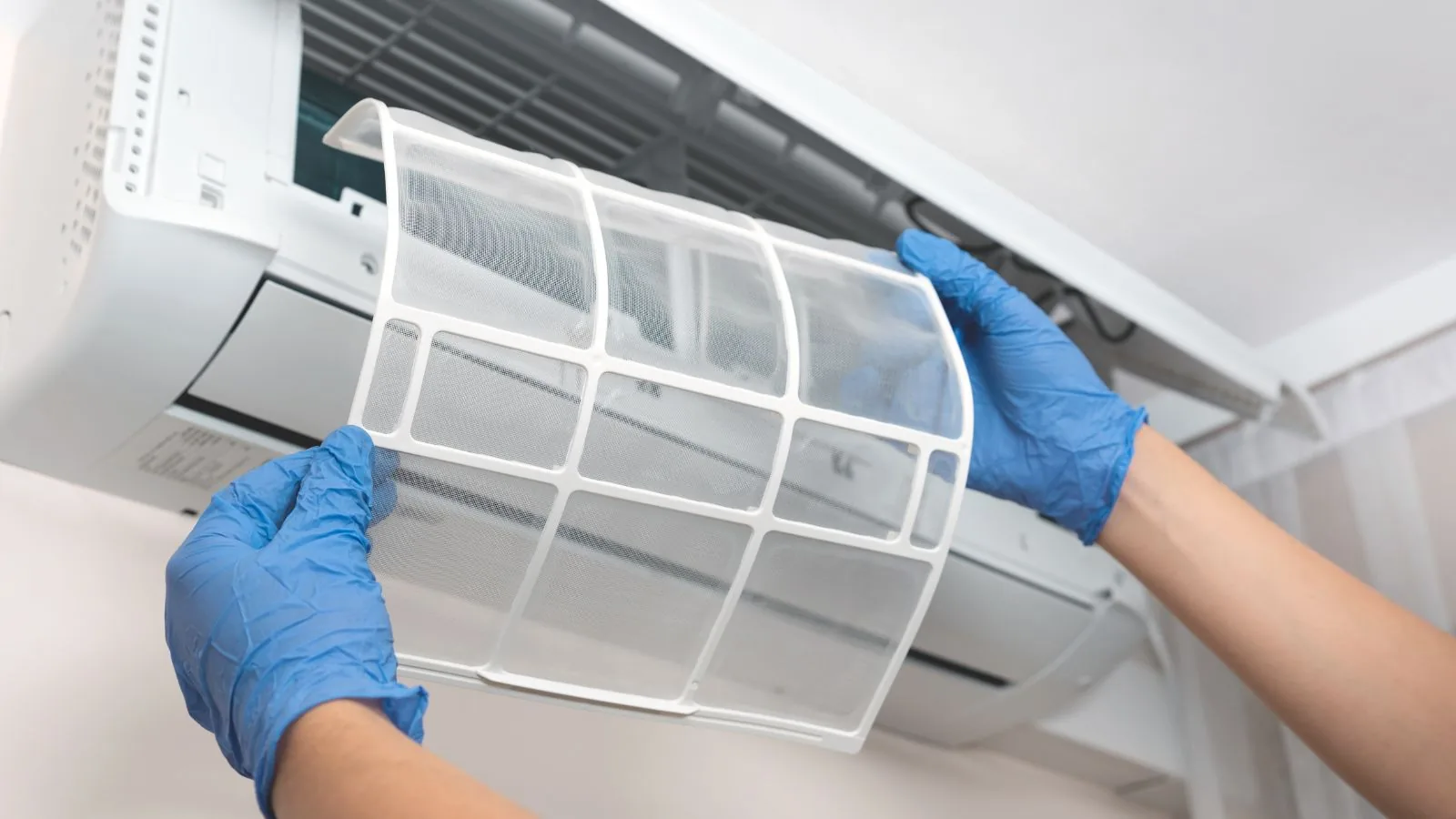
Air conditioner water damage in O'Fallon usually comes from the condensate line, not from the cooling itself. A running system removes moisture from indoor air, and that water leaves through a drain. When the line clogs, the pan overflows, and water soaks ceilings, closets and floors.
If water is dripping now, switch the system off at the thermostat so it stops producing more. Place a bucket under the drip, and keep clear of ceiling light fixtures. Our line is open around the clock if a ceiling or wall is wet.
Why air conditioners leak indoors
Clogged condensate line
Algae and debris block the drain, and water backs into the pan and out.
Overflowing drain pan
A rusted or cracked pan lets water reach the ceiling below an attic unit.
Frozen evaporator coil
Ice melts when the system shuts off and floods the pan at once.
Disconnected drain line
A loose or broken line drips behind a wall or above a ceiling.
Attic air handlers put the water above a finished ceiling, so the first sign is often a stain or a wet spot on drywall. Closet air handlers wet the wall base and carpet. A leak that is slow and constant can run for weeks, so look for a musty smell or a ceiling that keeps staining after you dry it.
How we handle the water damage
We use a moisture meter to find how far water traveled and a thermal camera to see wet insulation and drywall. Saturated insulation is removed, wet drywall is cut out if it will not dry, and the cavity is dried with air movers and a dehumidifier.
An HVAC contractor clears the line, repairs the pan or fixes the coil. The City of O'Fallon Building Division requires permits for mechanical repairs and remodels, so ask your contractor whether one applies. We coordinate the drying so the repair is not hidden behind wet materials.
Where the water goes depends on where the unit sits
| Air handler location | What gets wet | What we check |
|---|---|---|
| Attic | Insulation, the ceiling drywall below, light fixtures | Ceiling drywall, attic insulation, wiring boxes. |
| Hall or bedroom closet | Carpet, the wall base, stored boxes | Wall base, subfloor, closet contents. |
| Garage or utility room | Floor, drywall at the base, stored items | Slab surface, drywall base, adjacent rooms. |
| Basement or crawl space | Insulation, framing, any finished walls | Joists, subfloor, sill area. |
Homeowners can lower the odds of a repeat. Have the condensate line flushed during a service visit, check the drain pan for rust, and ask the HVAC contractor about a float switch that shuts the system off when the pan fills. A switch will not stop a pinhole leak, but it stops the most common overflow before it reaches the ceiling.
Ceiling or closet wet from the AC?
Shut the system off and call.
AC leaks and mold
Condensate water is not sewage, but it sits in warm, dark spaces and feeds mold when it is not dried. The EPA says mold needs moisture and that drying wet materials within 24 to 48 hours helps prevent growth. If you already see growth around the unit or in a closet, the mold remediation page explains testing and removal.
Do not run the system again until the drain is cleared. A restart can create more water and spread it.
What affects the cost
Time leaking
A single overflow and a months-long drip differ in moisture and mold risk.
Location of the air handler
Attic, closet and crawl space units wet different materials.
Insulation and drywall
Wet insulation is replaced, and drywall depends on how saturated it is.
Drying time
Closets and attic ceilings can need several days of drying equipment.
Want your real number? Call (636) 747-8964. Scope and price are explained before work starts.
Insurance and next steps
Sudden overflow is often covered, while a long-term leak from poor maintenance often is not. Check your policy or ask your insurer. Keep the HVAC service invoice and take photos of the pan and stained area. For ceiling repair after drying, see ceiling water damage repair, and for opened walls, wall and drywall repair.
Safety steps before help arrives
- Turn the system off at the thermostat, then at its breaker, so the unit stops making more condensate.
- Stay out of the attic or closet if the floor around the air handler is wet and you cannot see where you are stepping.
- Keep clear of wet light fixtures and outlets below a stained ceiling.
- Catch drips in a bucket and move belongings out from under the stain.
- Photograph the pan, the drain line and the stain before anything is moved.
According to EPA guidance, indoor humidity should stay between 30 and 60 percent, which is why a clogged condensate line matters beyond the stain it leaves.
AC Leak Water Damage questions
Why is my air conditioner leaking water inside?
The most common cause is a clogged condensate drain line. Water backs up in the pan and overflows. A frozen coil or a cracked pan can also cause it.
Should I turn off my AC if it is leaking?
Yes. Switch it off at the thermostat to stop making more water. Call an HVAC contractor to clear the line and call us for drying.
Can an AC leak cause mold?
It can, if materials stay wet. Drying within 24 to 48 hours lowers the risk. Existing growth should be assessed.
Do you handle emergency AC leak water damage at night?
Dispatch is open 24/7. If water is running through a ceiling at night, call and a crew is sent when one is available.
Does insurance cover AC leaks?
Sudden overflow is often covered, slow leaks often are not. Check your policy or ask your insurer.