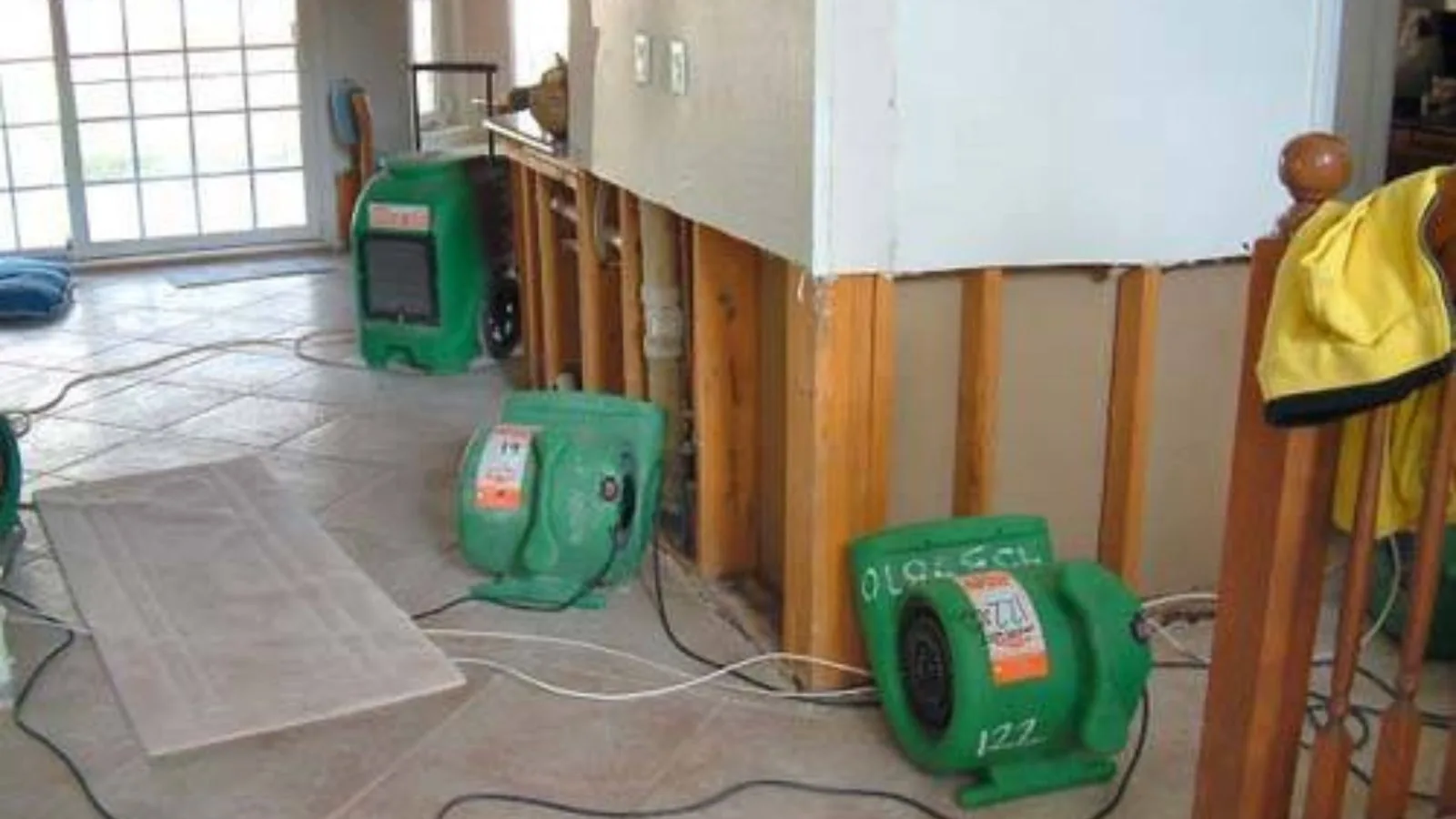
Wall and drywall water damage is the staining, softening and swelling of walls and baseboards after a leak. Gypsum drywall wicks water upward from the floor and absorbs it from behind. A wall that feels only damp may be saturated inside, and insulation in the cavity keeps it wet for weeks.
Stained, bubbling or soft wall? What it means
Brown or yellow stains
Water has soaked through, often from a pipe or a roof leak.
Bubbling or peeling paint
Moisture is pushing paint off the surface.
Soft or crumbling drywall
The gypsum core has lost strength and should be cut out.
Swollen baseboards
Baseboards soak water at the floor line, often before the wall shows anything.
Water damage on baseboards is a common first sign, because trim sits where water collects. Pull back a corner of baseboard or check with a moisture meter. A thermal camera shows cool spots behind paint without cutting.
How we decide what to cut
The goal is to cut as little as possible. We measure moisture across the wall and flag the wet area. Drywall that is saturated, soft or stained with contaminated water is cut out, usually a few inches above the wet line. Drywall that is only damp can often be dried in place with airflow and dehumidification.
Insulation behind the wall is checked too. Wet batts hold water against the studs and have to be removed. Studs are dried and measured before new drywall is hung.
Find the source
A plumber or roofer stops the leak.
Map moisture
We read the wall, the baseboard and the floor along the wall.
Open and dry
Wet drywall is cut, insulation removed and the cavity dried.
Hand off
When readings are dry, a contractor can hang, tape, texture and paint.
Wall still wet?
Call and describe the stain.
Repair steps after drying
| Step | Who does it | What to know |
|---|---|---|
| Stop the source | Plumber or roofer | Repair before closing the wall. |
| Dry the cavity | Mitigation crew | Readings must match the dry reference. |
| Replace drywall | Contractor | Tape, mud and sand each need drying time. |
| Prime and paint | Contractor | Primers block old stains that bleed through. |
Repairs that involve wiring, plumbing or ductwork belong to licensed trades. The City of O'Fallon Building Division requires permits for plumbing, electrical and mechanical repairs and remodels, so ask your contractor whether one applies.
Where the water came from
Walls get wet from supply lines, drains, roof leaks, window leaks and flooding. The source determines the water category and the next step. If a pipe burst, see burst pipe water damage. If a ceiling stain is spreading down the wall, see ceiling water damage repair. Moisture trapped in a closed wall can lead to mold, covered on the mold remediation page.
Flood cuts, insulation and outlets
When a wall is saturated, the standard fix is a flood cut. The drywall is cut horizontally at a height above the wet line, often chosen to land on a stud or a sheet seam, so the cavity can be opened and dried. The cut is straight, which makes the later patch easier.
Fiberglass batts can sometimes be dried if they are lightly damp, though they are usually replaced when soaked. Blown-in insulation holds water more stubbornly and is usually removed from the wet section. Studs and the bottom plate are measured with a moisture meter before anything is closed.
Outlets and switch boxes in a wet wall are a safety question. Turn off the breaker for that circuit before touching anything. Wiring that was soaked should be checked by an electrician, because corrosion can hide inside a box that looks fine.
What affects the cost
Wall area
More wall means more drywall, insulation and paint.
Saturation
Soaked drywall is cut, damp drywall may be dried.
Insulation and framing
Wet insulation is replaced and framing is dried.
Finishes
Texture and paint matching add labor.
Source repair
Fixing the leak is a separate trade.
Want your real number? Call (636) 747-8964. Scope and price are explained before work starts. Sudden leaks are often covered by a homeowners policy, while slow ones often are not. Check your policy or ask your insurer.
Safety steps before cutting into a wall
- Turn off the breaker for outlets and switches in the wet wall before touching it.
- Wear eye protection and a mask, since wet drywall crumbles and releases dust.
- In an older home, ask about testing before disturbing old plaster, texture or paint.
- Do not push on a soft wall that could fall.
- Photograph the stain and any visible cracks first.
Wall and Drywall Water Damage questions
How do I know if drywall needs to be replaced?
If it is soft, crumbling, bulging or stained by contaminated water, it is replaced. Firm, damp drywall can often be dried.
Can I paint over a water stain?
Not before the wall is dry and the leak is fixed. Use a stain-blocking primer afterward.
Do you hang and paint drywall?
Our scope is mitigation and drying. A contractor handles the repair, and we coordinate timing.
Why do baseboards swell?
They are porous and sit at the floor line where water collects.
Is wall water damage an emergency?
Active leaks are. A stain that is not growing can wait for a daytime call, but dry it quickly.