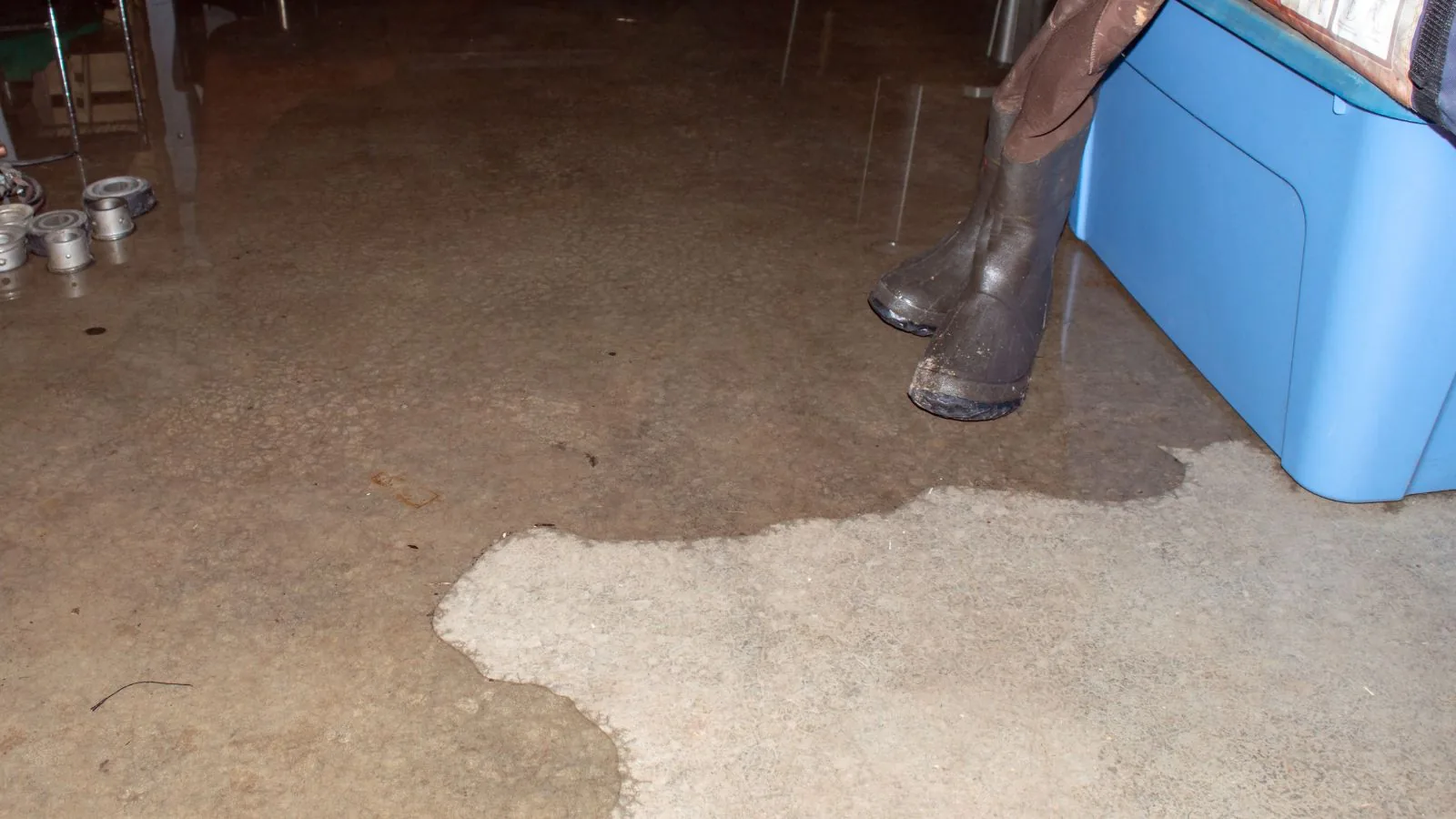
Carpet water damage is carpet and padding that took on water from a leak, appliance or flood. Carpet fibers dry quickly. The pad underneath is a sponge, and it keeps water against the subfloor long after the surface feels dry. That hidden layer is what causes odors and mold.
Carpet soaking wet or squishy?
If carpet feels wet when you step on it, if water squishes up around your shoe, or if a musty smell starts a day or two after a leak, water is in the pad and probably in the subfloor. Surface drying will not fix it. A truck-mount or portable extraction unit pulls water from the carpet and pad, and drying equipment finishes the job.
Time matters. The EPA advises drying water-damaged materials within 24 to 48 hours. Pad that stays wet longer is usually replaced.
Squishy feel
Water is held in the pad.
Musty smell
Moisture and microbes are active in the pad or subfloor.
Stains on the carpet
Wicking brings dirt and brown stains to the surface as it dries.
Loose seams
Carpet can delaminate or ripple when wet.
Save it or replace it?
| Water type | Carpet | Pad |
|---|---|---|
| Clean supply water, dried fast | Often saved | Often saved if extracted and dried. |
| Clean water, wet over a day | May be saved | Often replaced. |
| Gray water from a washer or dishwasher | Cleaned and dried, sometimes replaced | Replaced. |
| Sewage or floodwater | Removed | Removed. See flood damage cleanup. |
Carpet is lifted from the tack strip at a corner so the pad and floor can be checked and dried. Replacing pad is cheaper than the problems wet pad causes, and the carpet can be reinstalled and stretched once the room is dry.
How we dry wet carpet
Extract
We pull water from the carpet and pad with extraction equipment.
Lift and float
The carpet is lifted from the strip and floated on air movers so air reaches the pad and subfloor.
Dry
Air movers and dehumidifiers run until the carpet, pad and floor read dry.
Clean and reinstall
Carpet is cleaned, deodorized and reinstalled, or replaced.
Carpet still wet?
Call and describe it.
Carpet and mold
Mold needs moisture and organic material, and wet carpet and pad provide both. If you already smell mildew or see spotting on the carpet backing, the mold remediation page explains testing and containment. Drying properly now prevents the need for that later.
If the carpet is over a basement slab, the basement water damage cleanup page covers below-grade moisture.
Which carpets handle water best
Synthetic fibers such as nylon and polyester do not absorb water, so they dry well. Wool and other natural fibers take water in, and they can shrink, stain or lose color. The backing matters too. Some older carpets use jute backing that darkens and weakens when it stays wet, and latex adhesive can let the layers separate.
Ask yourself how old the carpet is and what it is made of. A newer synthetic carpet over a fresh pad is a good candidate for drying in place. An older carpet with a brittle backing may not survive being lifted, and replacing it can be the better call.
Stains and odors after drying
As carpet dries, water wicks up through the fibers and carries dirt and tannins to the tips. That produces brown spots that were not there before, even on a clean carpet. Cleaning after drying usually removes them, which is why we hold off on cleaning until the readings are dry.
A musty odor means moisture stayed somewhere, usually in the pad or the subfloor. Deodorizing masks a symptom unless the wet layer is dealt with, so we check the smell against the readings before we call a room finished.
What affects the cost
Carpet and pad type
Berber, plush and synthetic pads behave differently.
Water category
Gray or contaminated water adds cleaning or removal.
Time wet
Water left over a day often means pad replacement.
Area
More area means more extraction, air movers and labor.
Reinstallation
Stretching and reinstalling carpet is a separate step.
Want your real number? Call (636) 747-8964. Scope and price are explained before work starts. A sudden leak is often covered by a homeowners policy, while seepage often is not. Check your policy or ask your insurer.
How the standard treats carpet
Under the ANSI/IICRC S500 standard, carpet from a clean source can often be dried in place, while carpet and pad that sat in gray or contaminated water are generally removed. Cushion is the part that rarely recovers, since foam holds water long after the surface feels dry.
Carpet Water Damage questions
Can wet carpet be saved?
Often, if the water was clean and it was extracted and dried quickly. Pad is frequently replaced.
How long does carpet take to dry?
Usually a few days with proper equipment. We read moisture in the carpet, pad and subfloor to confirm.
Why does carpet smell musty after drying?
Moisture stayed in the pad or subfloor. Cleaning and deodorizing help, and wet pad should be replaced.
Do I need to replace the pad?
Often, if it was wet more than a day or the water was not clean.
Does homeowners insurance cover wet carpet?
Often for sudden water damage, rarely for gradual leaks. Check your policy or ask your insurer.