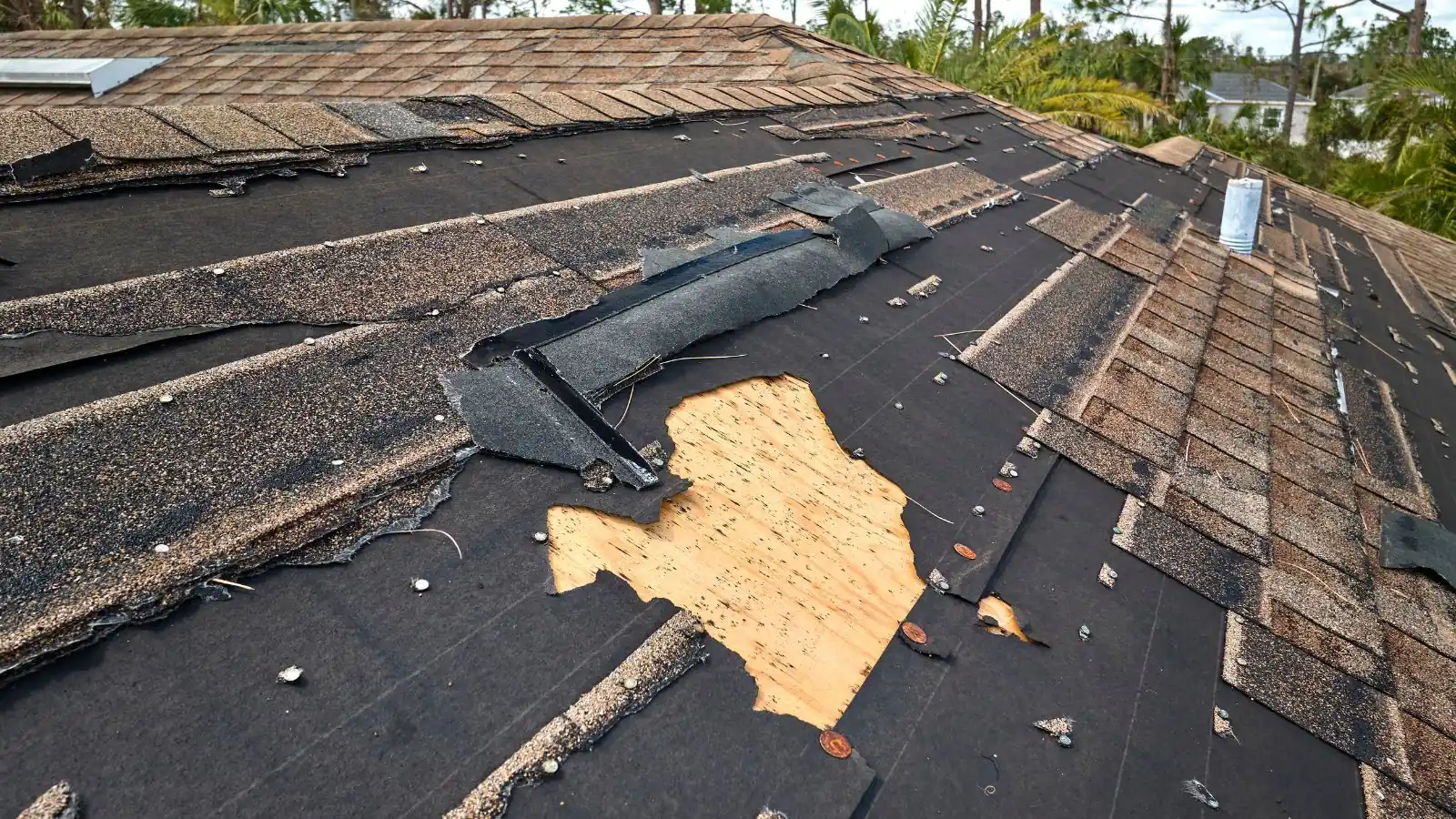
Storm water inside your home is an emergency, and our 24/7 line is open right after the weather passes. While you wait, move people away from sagging ceilings, place buckets under drips, lift valuables off wet floors and take photos. Do not climb on a wet roof. Call 911 or the utility for downed lines or gas smells before calling us.
Storm damage: when water gets into the building
Storm water damage is water that enters through the envelope of the building, meaning the roof, windows, siding, doors or foundation, during or after severe weather. It is different from rising flood water, which is covered on the flood damage cleanup page. A torn shingle or a failed window seal is a storm loss.
Because storms hit many houses at once, calls spike. Dispatch stays open nights, weekends and holidays so we can respond as crews become available.
Wet ceiling after rain
A stain or drip appears below a roof section or an attic vent.
Water around windows
Wind-driven rain pushes past failed seals and trim.
Damp walls
Rain running behind siding soaks insulation and drywall.
Wet basement wall
Saturated ground and clogged gutters push water in at the foundation.
How we handle storm water damage
Make it safe
We check for sagging ceilings and wet electrical areas before working.
Extract
Standing water is removed from floors and low spots.
Map moisture
Meters and a thermal camera show where water got behind walls and above ceilings.
Dry
Air movers and dehumidifiers dry materials until readings return to normal.
A roofer or window contractor closes the opening. Temporary tarping stops more rain. We deal with the water that got in. If it came through the ceiling, read ceiling water damage repair. If it entered below grade, see basement water damage cleanup.
Rain coming through?
Call and describe the room.
O'Fallon storms: what to watch
The National Weather Service St. Louis issues the flash flood and severe storm warnings for St. Charles County, and its alerts are worth enabling on a phone. After a heavy storm, check the attic, the ceilings under roof valleys, window frames and the basement the same day, because a slow leak can run for days unseen.
Documented storm events locally include the 2008 flash flooding that put Dardenne Creek, Peruque Creek and Big Creek out of their banks, and the 2015 flooding with an O'Fallon storm total of 8.79 inches. Those events involved rising water, which is covered on the flood page. Wind-driven rain and roof damage in smaller storms are the loss on this page.
Common storm entry points
Roof valleys and flashing
Water follows seams where two roof planes meet, and around chimneys and vents.
Plumbing vent boots
Rubber collars crack and let water run down the pipe into the attic.
Windows and doors
Wind-driven rain gets past worn seals and trim.
Gutters and downspouts
A clogged gutter spills along the wall, and a short downspout dumps water at the foundation.
Look at these places after a heavy storm. A ceiling stain two rooms away from the damaged roof is normal, because water travels along rafters and ductwork. Photograph each stain with a date, and mark its edge in pencil so you can see if it grows.
Temporary protection and paperwork
A roofer can tarp an opening or board a window. Those temporary repairs are usually part of a claim, so keep the receipt. Insurers expect you to prevent more damage once you know about it, which means acting quickly even before an adjuster comes.
We record moisture readings and the extent of the wet area, then give you a written scope for the water side of the loss. The roof or window repair is the contractor's scope, and the two documents together tell the whole story.
What affects the cost
Entry point
A roof leak, a window leak and a foundation leak each reach different materials.
Time before drying
Water left for days reaches framing and insulation.
Rooms affected
More rooms mean more equipment and monitoring.
Insulation and drywall
Saturated insulation and drywall are usually removed.
Repair of the opening
Roofing and windows are separate trades.
Want your real number? Call (636) 747-8964. Scope and price are explained before work starts.
Insurance after a storm
Wind and rain damage is often covered by a homeowners policy, though policies differ and some have separate wind or hail deductibles. Flood from rising water is usually excluded. Check your policy or ask your insurer, take photos before cleanup, and save receipts for temporary repairs such as tarps.
Safety steps after a storm
- Stay away from downed lines and anything touching them.
- Do not drive or walk through floodwater. The National Weather Service message is turn around, do not drown.
- Run generators outdoors only, well away from windows, to avoid carbon monoxide.
- Stay off a damaged roof and out of rooms with sagging ceilings.
- Photograph the damage before tarping or cleanup.
Standards for the work are in ANSI/IICRC S500, which treats floodwater as contaminated and calls for removal of porous materials that cannot be cleaned.
Storm damage in Streets of Caledonia
Newer homes can leak at flashing and young lots. The Streets of Caledonia page covers what to check after a storm.
Storm Water Damage questions
Do you handle storm water damage emergencies at night or on weekends in O'Fallon?
Yes. Dispatch is open 24/7, including nights, weekends and holidays. Call, describe where the water entered, and a crew is sent when one is available. We do not promise an arrival time.
Is storm damage the same as flood damage?
No. Storm damage is water entering through the roof, windows or walls. Flood damage is rising water from outside, usually Category 3.
Should I tarp the roof first?
A roofer can place a temporary tarp. Do not climb a wet roof yourself.
Does insurance cover wind-driven rain?
Often yes for sudden storm damage, but policies differ. Check your policy or ask your insurer.
How soon should wet insulation come out?
Soon. Saturated insulation holds water against framing and can start to smell within days.