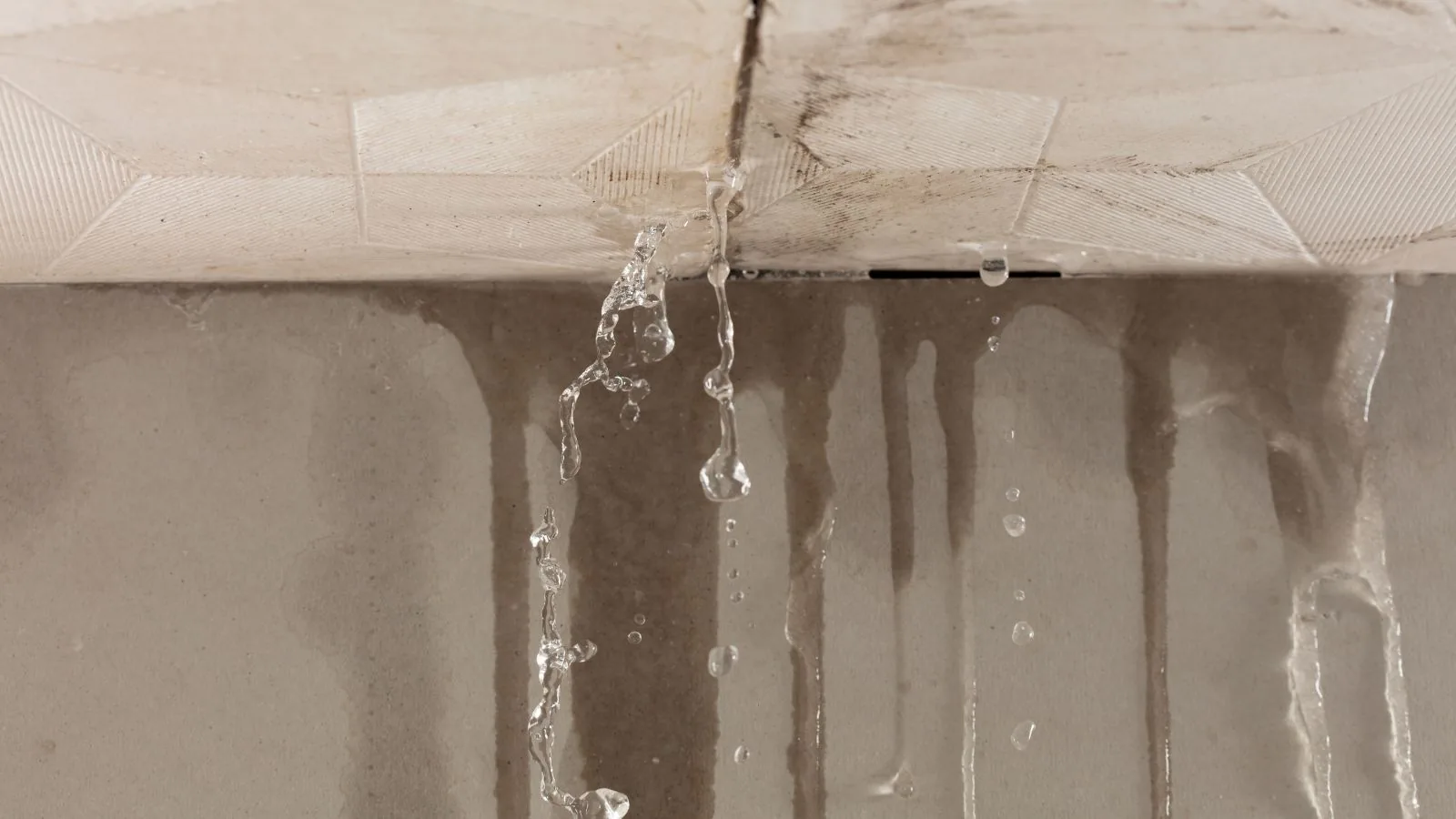
A ceiling that is dripping, bulging or sagging is an emergency, and our 24/7 line is open. While you wait, move people and furniture out from under it, put a bucket under any drip, and switch off the fixture and the breaker for that room if you can reach the panel dry. If the ceiling is bowed, poke a small hole to drain it only if you can stand clear.
Ceiling water damage repair covers the finished surface and what sits above it: insulation, framing and the source, whether that is a roof leak, an upstairs bathroom, a supply line or an air handler in the attic.
When a wet ceiling is an emergency
Wet drywall is heavy and soft. A ceiling holding a few gallons can collapse, and the water in it sits against wiring and light fixtures. A stain that grows after dark, a ceiling that bows, or water running from a light fitting all call for immediate attention, including after hours if it happens at night.
Not every stain is active. A ring that has not changed in weeks may be old, but only a moisture meter can say whether the drywall is still wet. We read the ceiling, the wall below it and the space above before deciding what to cut.
Brown or yellow ring
A stain with a darker edge means water has been present and may be returning.
Bulge or sag
Saturated drywall bows downward. Treat it as heavy and unsafe to stand under.
Peeling paint and bubbles
Moisture is behind the paint, even if the surface feels dry.
Drip from a fixture
Water in a light box is an electrical hazard. Turn off the breaker and stay clear.
Finding where the water comes from
The stain is rarely under the leak. Water travels along rafters, ductwork and pipe runs before it drops. We use a moisture meter and a thermal camera to trace the wet path, then check the room above, the attic and the roof line from the ground. A plumber or roofer repairs the source. We make sure the ceiling and the cavity behind it are dry before anyone closes it up.
That sequence matters. Patching a stain over wet drywall locks moisture in, and the paint fails again within weeks.
Roof leaks that come through the ceiling
Roof leaks have no page of their own here because they end in the same place, the ceiling. Rain finds a lifted shingle, a flashing gap or a cracked vent boot and soaks the decking and insulation first. By the time a stain shows, the attic insulation above may already be saturated and flattened, which lowers its insulating value until it dries or is replaced.
A temporary tarp from a roofer can stop more water while a repair is arranged. Inside, we remove wet insulation, dry the framing and check the ceiling for hidden moisture. If storm wind opened the roof, the storm water damage page covers what comes next.
Ceiling dripping now?
Clear the room and call the line.
Repair options and honest trade-offs
| Condition | What usually happens | Why |
|---|---|---|
| Small stain, drywall firm and dry | Seal, prime and paint after the leak is fixed | No structural damage, so cutting is not needed. |
| Stain with soft or bubbled drywall | Cut out the wet section and replace | Wet gypsum loses strength and can grow mold. |
| Sagging or collapsed ceiling | Remove the section, dry the cavity, rehang drywall | Saturated drywall will not hold its shape. |
| Textured or popcorn ceiling | Match texture after the patch cures | Matching takes extra steps and time. |
Repairs that touch wiring, plumbing or ductwork belong to licensed trades. The City of O'Fallon Building Division requires permits for plumbing, electrical and mechanical repairs, so ask your contractor whether one applies. We coordinate drying so those trades can work in a dry cavity.
What affects the cost of ceiling repair
How long it leaked
A one-time drip and a months-long seep are different in moisture, insulation and mold risk.
Ceiling area
More square footage means more drywall, taping and paint.
What is above
Wet attic insulation, wiring and ductwork add removal and drying steps.
Texture and finish
Matching a textured ceiling takes more labor than a flat one.
Source repair
Fixing the roof, pipe or air handler is a separate trade and cost.
Want your real number? Call (636) 747-8964. Scope and price are explained before work starts.
Insurance and related pages
A sudden roof or pipe failure is often covered, while a slow leak from poor upkeep often is not. Check your policy or ask your insurer, and take dated photos of the stain before repair. For water that came from a hidden pipe, read burst pipe water damage. For the drying step itself, see structural drying.
Safety steps before help arrives
Wet ceiling materials are rated by water category and class under the ANSI/IICRC S500 standard, which is how a crew decides whether drywall can dry in place or has to come down.
- Do not stand or sit under a bulging ceiling, because soaked drywall can drop without warning.
- Turn off the breaker for any light fixture or fan in the wet area before touching it.
- Place a bucket under active drips and move furniture and rugs out of the way.
- Stop the water source above if you know it, such as a bathroom supply line or a failed fixture.
- Photograph the stain from several angles before it is cut or painted.
Ceiling Water Damage Repair questions
Do you handle ceiling water damage emergencies at night or on weekends in O'Fallon?
Yes. Dispatch is open 24/7, including nights, weekends and holidays. If the ceiling is dripping or bowing, clear the room and call. A crew is sent when one is available and we do not promise an arrival time.
Should I cut into a bulging ceiling?
Only if you can stand clear. A small hole lets trapped water drain in a controlled way and reduces the chance of a sudden collapse. Keep a bucket and plastic ready, and keep power off to fixtures in that area.
Can I just paint over a ceiling stain?
Not before the leak is fixed and the drywall is dry. Painting over wet drywall traps moisture, and the stain usually returns. A moisture reading tells you when it is dry.
Do roof leaks need a separate company?
A roofer repairs the roof. We handle the water that came inside, including wet insulation, framing and ceiling drywall.
Will insurance cover ceiling water damage?
Sudden and accidental damage is often covered, gradual leaks often are not. Check your policy or ask your insurer, and keep photos and moisture records.