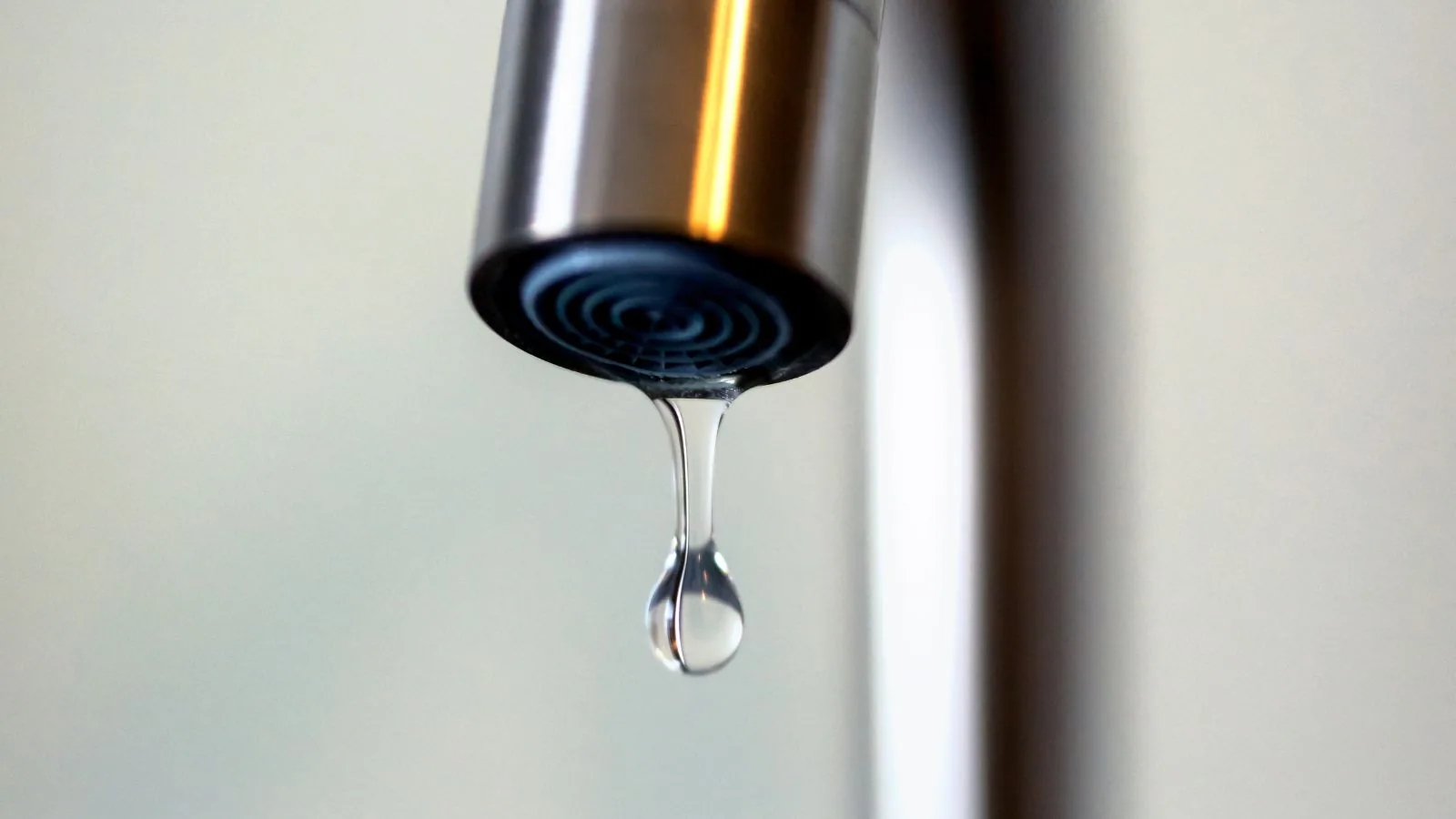
Kitchen water damage is the wet cabinets, swollen floors and damp walls left by a leak under the sink, behind the dishwasher or at the fridge line. Most start small. A drip at a supply connector or a loose trap can run for weeks, so the first sign is often a warped cabinet floor or a musty smell, not a puddle.
Water under the kitchen sink: what to do
- Close the shutoff valves under the sink, or the main valve if they will not turn.
- Empty the cabinet and photograph the damage before drying anything.
- Place a bucket under any active drip and wipe standing water.
- Leave the cabinet doors open to let air in, and run a fan if you have one.
- Do not seal or caulk over damp material. Call for a moisture check.
If the water is actively flowing or has reached the floor in the kitchen, treat it as urgent. Our line is open 24/7, though a slow leak found under a sink is not usually an after-hours emergency. For a flood, see water extraction.
What gets wet in a kitchen
Cabinet base and toe kick
Particleboard swells and crumbles when wet, and the toe kick traps water.
Subfloor under cabinets
Water reaches the floor under cabinets where it cannot be seen.
Wall behind the sink
Supply and drain lines run in the wall. A slow leak soaks insulation and drywall.
Countertop seams
Water can get into particleboard cores under laminate counters.
Particleboard cabinet boxes are common and weak when wet. Solid wood and plywood cabinets can often be dried. We read the cabinet, the toe kick and the floor with a moisture meter, then decide with you what to dry and what to replace.
How we dry a kitchen
Find the source
We trace the leak to a supply line, drain or appliance and note whether a plumber is needed.
Open the cavity
Toe kicks and base panels come off so air can reach the space.
Dry
Air movers and a dehumidifier run until cabinet, subfloor and wall readings are dry.
Decide on repair
We tell you what can stay, and what to replace.
Kitchen leak spreading?
Shut the valve and call the line.
Dry it, replace it or repair it
| Material | Can it be dried? | Notes |
|---|---|---|
| Plywood or solid wood cabinets | Often yes | Check for swelling at joints and finish damage. |
| Particleboard cabinets | Rarely if saturated | Swelling is permanent. |
| Vinyl and laminate flooring | Sometimes | Water under the seams can lift edges. |
| Tile floors | Yes, the tile | The subfloor under it may stay wet. |
| Drywall behind cabinets | If not saturated | Wet gypsum is cut and replaced. |
If the water came from a failing appliance, read appliance leak water damage. For opened walls behind the sink, see wall and drywall water damage repair. Wet vinyl or hardwood may follow the steps on hardwood floor water damage repair.
The three usual kitchen sources
Dishwashers, sink plumbing and refrigerator ice-maker lines account for most kitchen leaks. A dishwasher leaks from its door seal, its inlet valve or its drain hose. Sink plumbing leaks at compression fittings, the P-trap and the faucet supply lines. An ice-maker line is a small plastic tube that can crack or pull loose behind the fridge.
Each source leaves a different pattern. A sink leak is centered under the sink and wets the cabinet base. A dishwasher leak runs along the floor toward a neighboring cabinet. A fridge line leak can hide for weeks, because the unit sits against a wall.
Why a musty cabinet should not be ignored
A cabinet that smells damp is telling you moisture is trapped in a closed space. The air barely moves, so wood stays wet and mold can start. Empty the cabinet, check the back wall and the floor with a flashlight, and look for dark spots or swelling. If you find them, call for a moisture check before you refill the space.
For leaks that started at the appliance itself, appliance leak water damage covers the failure points in more detail.
What affects the cost
Cabinet material
Plywood can be dried, particleboard is usually replaced.
How long it leaked
A slow leak found late has soaked more material.
Flooring
Hard floors can be saved more often than soft ones.
Drying days
Closed cabinet spaces dry slowly, so equipment may run several days.
Rebuild scope
New cabinets, counters and flooring are separate from drying.
Want your real number? Call (636) 747-8964. Scope and price are explained before work starts. Sudden kitchen leaks are often covered by a homeowners policy, while slow seepage often is not, so check your policy or ask your insurer.
Standards that guide kitchen drying
Kitchens hold cabinets, toe kicks and subfloor that trap water. The ANSI/IICRC S500 standard describes drying these hidden cavities with documented readings, which is why a crew checks behind the toe kick and under the sink base instead of trusting the surface.
Kitchen Water Damage questions
How do I dry a cabinet after a leak under the sink?
Remove everything, open the doors, run a fan and, if it is still damp after a day, have moisture checked. Do not paint or seal damp cabinets.
Can swollen particleboard be saved?
Rarely. Once particleboard swells it does not return to its original shape, so replacement is usually needed.
Is a slow leak under the sink an emergency?
Shut off the valve and call during the day. If water is spreading across the floor, call the 24/7 line.
Will you replace the cabinets?
Our scope is drying and documenting. A contractor handles cabinet replacement and finish work, and we coordinate timing.
Does homeowners insurance cover kitchen leaks?
Sudden leaks are often covered, gradual ones often are not. Check your policy or ask your insurer.