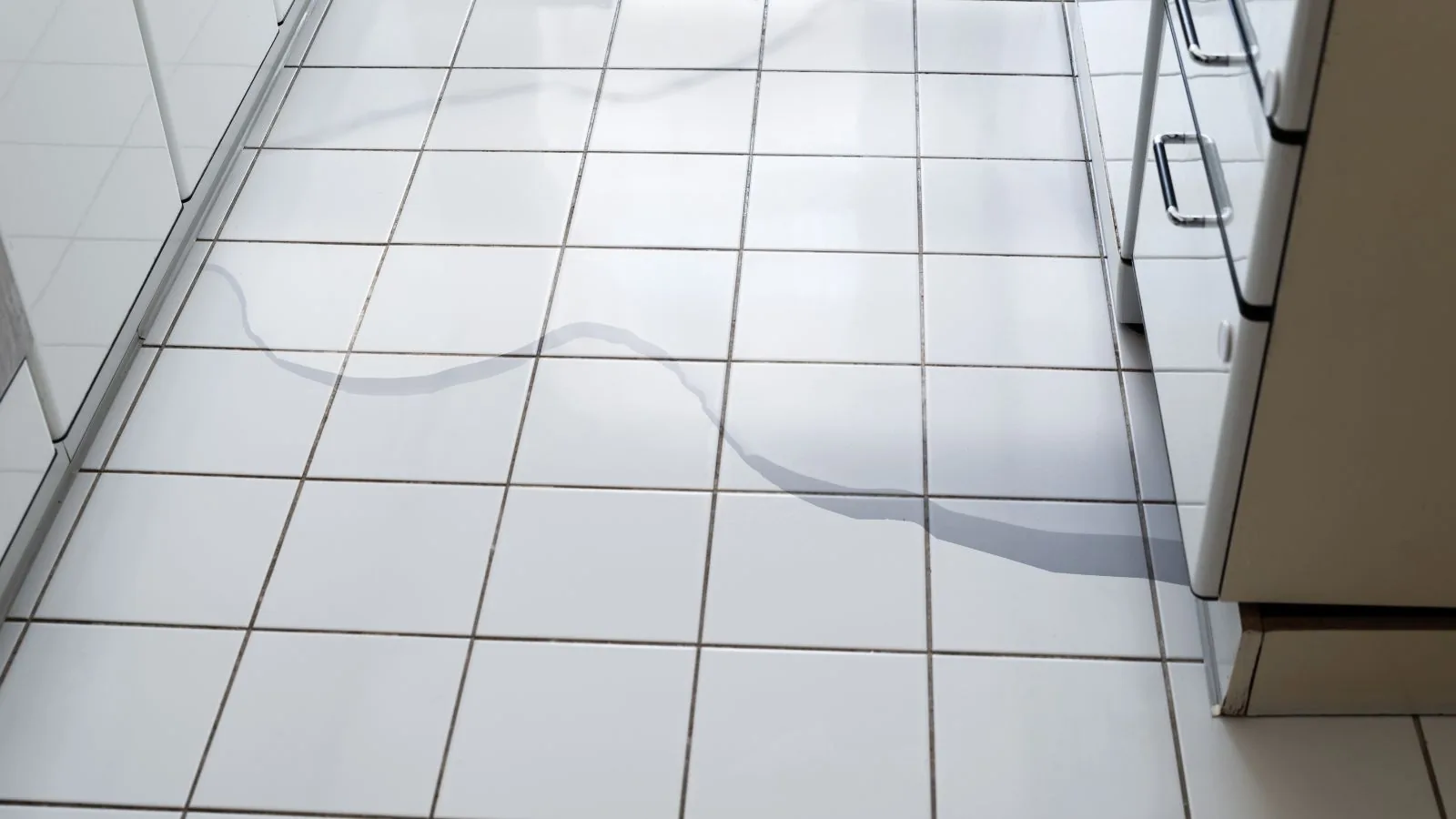
An appliance leak can flood a floor fast or hide inside a wall for weeks, and our 24/7 line is open for both. While you wait, unplug the appliance only if the outlet is dry, close the valve behind it or the main shutoff, and pull the unit away from the wall if that is safe. Mop up what you can reach, but leave wet carpet and cabinets for the crew.
Washing machines, dishwashers, refrigerators with ice makers, and utility sink lines each fail differently. The source decides what water category you have and how far it traveled.
Appliance leak emergencies
A burst washer hose runs at full pressure and can put water through a floor in minutes. A dishwasher door gasket or drain line leaks smaller amounts but does so on every cycle. A fridge supply line behind the unit can drip for weeks and rot the subfloor before anyone sees it.
Emergency response means extraction begins as soon as a crew is free, including nights and weekends, because wet flooring under an appliance does not dry on its own.
| Appliance | Common failure | Water category |
|---|---|---|
| Washing machine | Burst supply hose, drain hose slips off the standpipe | Supply is Category 1, discharge is Category 2. |
| Dishwasher | Door seal, drain line, supply fitting | Category 2 once used water leaks out. |
| Refrigerator with ice maker | Thin supply line, loose fitting | Category 1. |
| Utility sink or drain | Clog or loose trap | Category 2 if drain water, Category 3 if from the sewer. |
Finding a leak you cannot see
Look for a cupped or soft floor in front of the appliance, a musty smell in the cabinet next to it, or a water bill that crept up. A moisture meter checks the floor and the wall behind. A thermal camera shows cool wet areas.
If a drain line backs up into a utility sink or floor drain, the water may come from the sewer rather than the appliance. The City of O'Fallon administers a Sewer Lateral Insurance Program through its Water and Sewer department, and the sewage backup page explains the difference.
Floor soft near the unit
Vinyl or laminate that feels spongy or lifts at the edge.
Water stain below
A ceiling stain below an upstairs laundry or bathroom.
Musty smell
A damp odor in the cabinet or closet around the appliance.
Rising water bill
A bill that climbs with no change in use.
Preventing the next appliance leak
Most appliance floods come from a handful of parts. Rubber washer hoses harden with age and can burst without warning, so many people swap them for braided stainless lines and replace them on a schedule. Look behind the fridge and under the dishwasher once a year for damp spots or green corrosion on fittings.
Know where each shutoff valve is before you need it. A washer with a valve box can be shut off after every use, and a leak sensor on the floor can send an alert. These steps do not replace a plumber, but they shorten the time water has to spread.
Water on the floor from an appliance?
Close the valve and call the line.
How the cleanup runs
We extract surface water and pull the appliance out if needed to expose the floor. Moisture meters check the subfloor and wall base. Wet flooring that cannot dry, such as soaked laminate, is removed. Air movers and a dehumidifier then dry the area. Cabinets are checked at the toe kick, where water collects.
Because Category 2 water is not clean, porous materials in its path are cleaned or removed. Hard surfaces can be cleaned and dried.
What affects the cost
Duration
A weeks-long drip and an hour-long burst have very different reach.
Flooring type
Tile, vinyl, laminate, hardwood and carpet are each handled differently.
Cabinets and wall base
Water in a cabinet base may need toe kicks removed to dry the space.
Water category
Used or drain water needs cleaning, not just drying.
Want your real number? Call (636) 747-8964. Scope and price are explained before work starts.
Insurance and related pages
Sudden appliance failure is often covered, while long-term seepage often is not. Check your policy or ask your insurer. Keep the failed hose or fitting, take photos of the model label, and keep any plumber invoice. If cabinets are involved, read kitchen water damage restoration. For soaked flooring, see carpet water damage.
Standards behind the sorting of appliance water
The ANSI/IICRC S500 standard sorts water by how contaminated it is. Supply water from a failed hose starts clean. Discharge from a washing machine or dishwasher carries soap and soil, so it is usually handled as gray water, which changes how carpet pad and cabinet bases are treated.
Appliance Leak Water Damage questions
Do you handle appliance leak emergencies at night or on weekends in O'Fallon?
Yes. Dispatch is open 24/7, including nights, weekends and holidays. Close the valve behind the appliance and call. A crew is sent when one is available, and we do not promise an arrival time.
Is washing machine water dirty?
Supply water is clean, but the machine's discharge is gray water and counts as Category 2. Carpet and pad that got it are usually removed.
Can a slow dishwasher leak cause real damage?
Yes. A slow leak can soften a subfloor and cabinet base for weeks before it shows. A moisture meter finds it.
Should I move the appliance myself?
Only if it is safe and unplugged. Heavy units can damage floors and hoses. If unsure, leave it and call.
Does insurance cover appliance leaks?
Sudden failures are often covered, gradual ones often are not. Check your policy or ask your insurer.