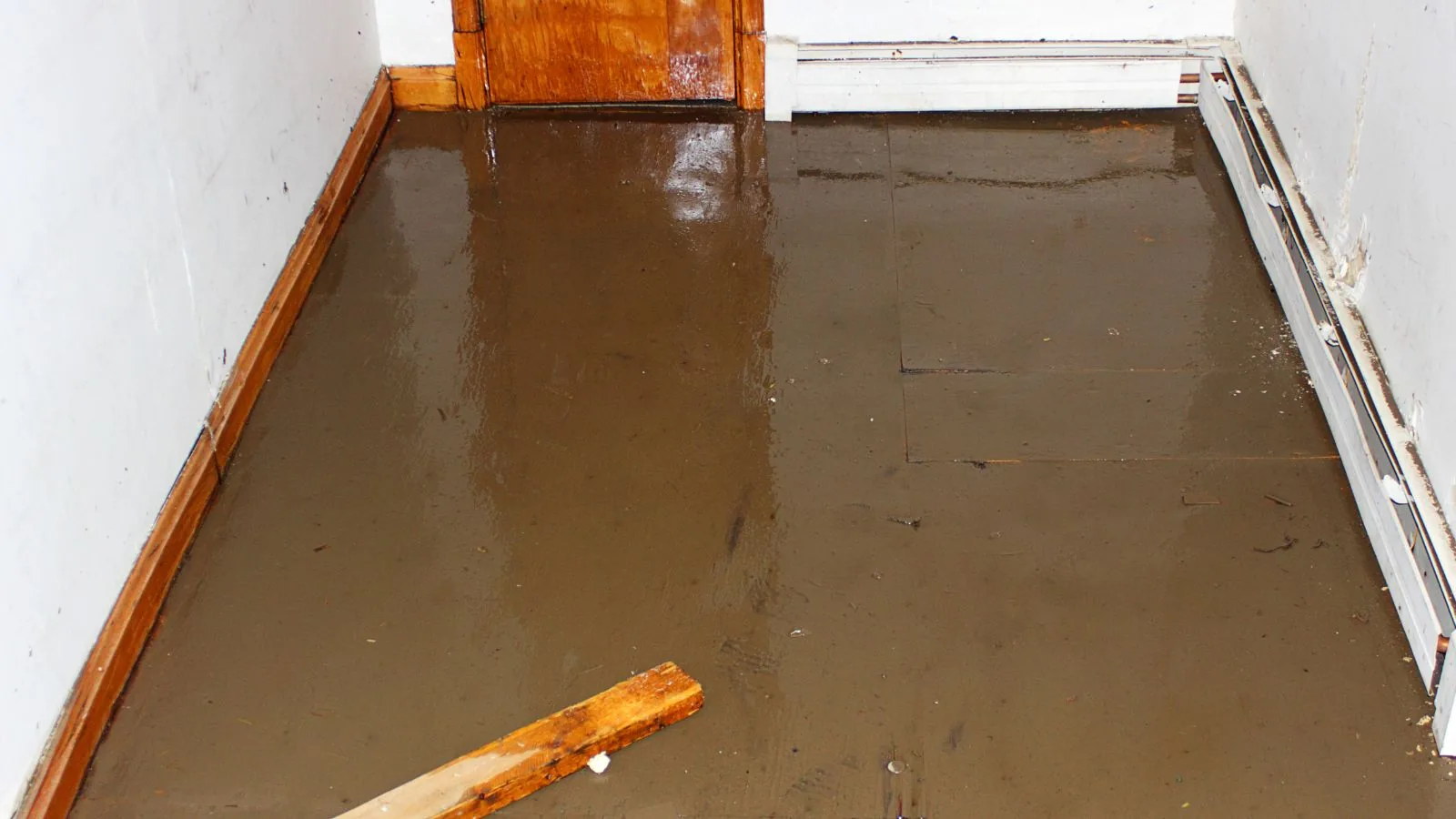
A flooded basement is an emergency, and our 24/7 line is open for it. While you wait, stay out if water is deep or touching outlets, shut off power at the panel only if you can reach it dry, move stored items off the floor and turn off the sump pump if it is pumping dirty water. Never go down stairs into rising water.
When a wet basement is an emergency
Basements hold water because they are the lowest room in the house. Once water enters through a wall crack, a floor drain, a window well or a sump basin that overflows, it has nowhere to go. It reaches carpet, drywall, boxes and utilities, and it can stand for days.
Fast extraction and drying are the priorities, and after-hours calls are normal when storms hit overnight.
Electrical safety in a basement
Many basements hold the panel, the furnace and the water heater. If water reaches them, do not step in. Call 911 or the utility for any electrical or gas hazard before calling us.
Where basement water comes from
| Source | What it looks like | Next step |
|---|---|---|
| Sump pump failure | Water rising in the pit, then across the floor | Check power and the discharge line, call for extraction. |
| Foundation seepage | Damp walls and floor after rain, white mineral stains | Dry the space, ask a contractor about drainage. |
| Window well overflow | Water pouring in around a window | Clear the well and call for extraction. |
| Sewer or floor drain backup | Dirty water from a drain | Treat as contaminated, see sewage backup cleanup. |
| Plumbing leak above | Water through the ceiling | Shut off the main. |
Sump pump failure and sewer backup are often excluded from a standard homeowners policy unless you buy an endorsement. The Missouri Department of Commerce and Insurance guide asks whether your policy covers sewer, drain or sump pump backup. Read it before the next storm.
How we clean a basement
Pump
Deep water is pumped out, then extraction removes the rest.
Triage contents
Boxes, furniture and electronics are sorted into save and discard.
Remove and dry
Wet carpet, pad, insulation and drywall that cannot dry are removed. Air movers and dehumidifiers dry the rest.
Clean and monitor
Surfaces are cleaned and readings are logged until dry.
Water in the basement now?
Call the line.
Finished versus unfinished basements
An unfinished basement with a concrete floor and bare walls is mostly extraction and cleaning. A finished basement has carpet, drywall, insulation and sometimes a bathroom, and each layer needs checking. Wall cavities hold water for a long time, and baseboards are the first sign.
Basement waterproofing is a separate trade. Restoration dries and repairs. Foundation drainage, sealing and sump upgrades are not our scope, and we point you to the right contractor. If the water was creek flooding, see flood damage cleanup. For wet carpet, see carpet water damage restoration.
After the water: humidity, smell and the sump
A basement stays damp after the water is gone because concrete and block hold moisture. The EPA suggests keeping indoor relative humidity below 60 percent, and ideally between 30 and 50 percent. A dehumidifier and a hygrometer are the simplest way to track it. We run commercial dehumidifiers during drying and tell you where the readings should end up.
Pumps fail at the worst time. Test yours by pouring water into the pit and watching it start, check the discharge line for kinks or ice, and ask a plumber about a battery backup. A pump on a circuit with no backup stops when the power goes out, which often happens during the same storm that fills the pit.
Cleaning and disinfecting what stays
Concrete floors, block walls and framing that stay are cleaned. If the water was contaminated, they are disinfected too. Items that cannot be cleaned are removed. A musty smell after drying usually points to hidden moisture in a wall cavity or under carpet that was left in place, and the structural drying page explains how we find it.
What affects the cost
Depth and area
A damp floor and a flooded basement are different jobs.
Finishes
Finished space has more material to remove and dry.
Water category
Contaminated water adds protective steps and disposal.
Contents
Stored items need triage and sometimes disposal.
Drying days
Concrete and wall cavities dry slowly.
Want your real number? Call (636) 747-8964. Scope and price are explained before work starts.
What to do before you go downstairs
- Check whether water is touching outlets, the furnace, the water heater or the electrical panel. If it is, stay upstairs and call.
- Do not run a gasoline pump or generator indoors, because exhaust can build up fast in a closed basement.
- Hold the handrail on wet stairs and wear boots with grip.
- Keep children and pets away from the stairwell.
- Photograph the waterline on the walls from the top of the stairs.
Basements in Copperfield
Lower levels take water first when creeks and storm drains back up. The Copperfield page covers a subdivision where a news report described flooded homes.
Basement Water Damage questions
Do you handle basement water damage emergencies at night or on weekends in O'Fallon?
Yes. Dispatch is open 24/7, including nights, weekends and holidays. Call, describe the depth and the source, and a crew is sent when one is available. We do not promise an arrival time.
Is basement water always contaminated?
No. Water from a plumbing break is clean at first, while sewer backup or floodwater is contaminated. We test by source and respond accordingly.
Can you waterproof my basement?
No. Restoration dries and repairs the damage. Waterproofing is a different trade.
What happens to my stored belongings?
We sort them into save, clean and discard. Cardboard and soft items that soaked usually go.
Does insurance cover a sump pump failure?
Often only with a sump or backup endorsement. Check your policy or ask your insurer.