Wall or floor still damp after the water was cleaned up?
If a wall still feels cool, a floor smells musty or carpet stays damp days after a leak, the water was removed but the materials were never dried. The trade name for that work is structural drying and dehumidification. In plain words, it is drying a building on purpose until the moisture meter says it is dry.
Surface-dry is not dry. Drywall, wood and concrete hold water inside, and a room can look fine while framing stays wet. EPA guidance says to dry water-damaged items within 24 to 48 hours to limit mold. Structural drying is how that is done when the water is in the building itself.
How moisture mapping works
Moisture mapping is the first step. A crew uses a pin or pinless moisture meter to read walls, floors and ceilings, and a thermal camera to show cool, wet areas. Readings are recorded on a sketch or log so progress can be checked daily.
We also read a dry reference point from an unaffected area of the same material. That reference sets the drying goal. Without one, no one knows what dry means for that wood or that drywall.
Drying goal
The reading from similar, unaffected material, used as the target.
Air movers
Fans that sweep dry air across wet surfaces to carry moisture off.
Dehumidifiers
LGR and desiccant units pull that moisture from the air so it does not redeposit.
Daily monitoring
Readings on a log show drying progress or reveal a wet spot that was missed.
Equipment, in plain words
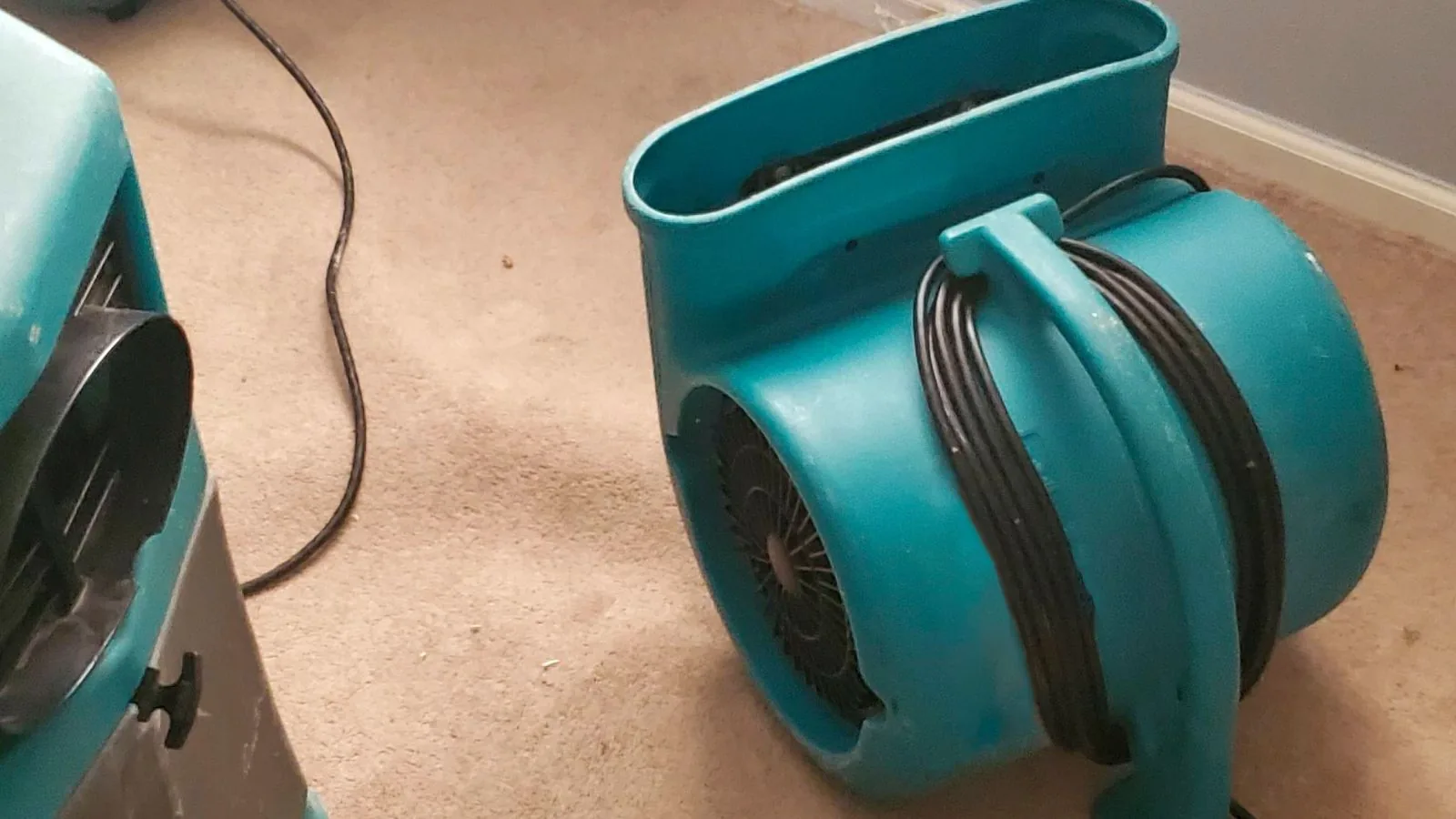
Air movers push air across a surface. LGR, or low grain refrigerant, dehumidifiers lower humidity in a closed room. Desiccant units help in cold or very damp spaces. Negative air machines with HEPA filtration are used when contamination or mold is present. Drying chambers use plastic sheeting to keep wet and dry areas apart.
Placement matters more than quantity. Equipment is moved as the readings change, and extra units are not added just to look thorough.
Wondering if it is dry?
Call and describe the leak.
How long drying takes
Many jobs take several days, but a calendar is not the goal. Drywall may dry in two or three days, while hardwood and concrete can take longer. We check the readings each visit and stop when they match the dry reference.
Drying is possible indoors only when the building can hold the equipment and windows can stay shut. The National Weather Service St. Louis office publishes forecasts with dew point and humidity, which helps you decide when to open a window and when to keep it closed during drying.
| Material | Typical drying behavior | If it will not dry |
|---|---|---|
| Drywall | Often dries in a few days if not saturated | Cut out and replace. See wall and drywall repair. |
| Hardwood flooring | Slow, may cup or crown | See hardwood floor repair. |
| Carpet and pad | Carpet can be dried, pad is often replaced | See carpet water damage. |
| Concrete | Very slow, measured with a meter | Dehumidify until the slab surface reads dry. |
Drying and mold
Mold needs moisture. Fast, measured drying removes it. If growth has already started, drying alone is not enough and the mold remediation page explains the S520 process. Moisture and drying come first, because mold treatment on a wet wall is wasted.
What the daily log shows
Each visit adds a line to a moisture log. It records the date, the readings at fixed points, the temperature and relative humidity, and the equipment on site. A wet area that is not dropping stands out after a day or two, and that is how a missed pocket of water gets caught.
When readings in the wet material come within range of the dry reference, equipment is removed and the log is closed. The log is also the record that a claim or a lender may ask for.
What affects the cost
Area and materials
More square footage and denser materials mean more equipment days.
Water category
Contaminated water adds cleaning before drying begins.
Equipment days
Each unit runs for as long as the readings need it.
Monitoring visits
Daily checks cost labor but prevent a wet spot from being sealed in.
Rebuild
Replacing materials that did not dry is a separate scope.
Want your real number? Call (636) 747-8964. Scope and price are explained before work starts.
Safety steps while equipment runs
- Keep equipment cords dry and out of walking paths.
- Do not unplug or move dehumidifiers and air movers, because the readings depend on them running.
- Keep children and pets away from the machines.
- Keep doors and windows closed unless the crew says otherwise.
- Call if a machine stops, trips a breaker or leaks.
Structural Drying questions
Why is my carpet still damp after the water was cleaned up?
Carpet pad and subfloor hold water long after the surface feels dry. They need extraction and drying equipment, or removal, to prevent odor and mold.
What is moisture mapping?
It is recording moisture readings across walls, floors and ceilings to find where water traveled and to track drying progress.
Can I rent a dehumidifier and dry the house myself?
For a damp room, a dehumidifier helps. For wall cavities, subfloors or large losses, you need meters, airflow and monitoring to know when it is dry.
How do you know when it is dry?
By comparing readings in wet areas with a dry reference from the same material.
Do you dry homes at night or on weekends?
Dispatch is open 24/7. Equipment runs around the clock, and visits are scheduled around readings.