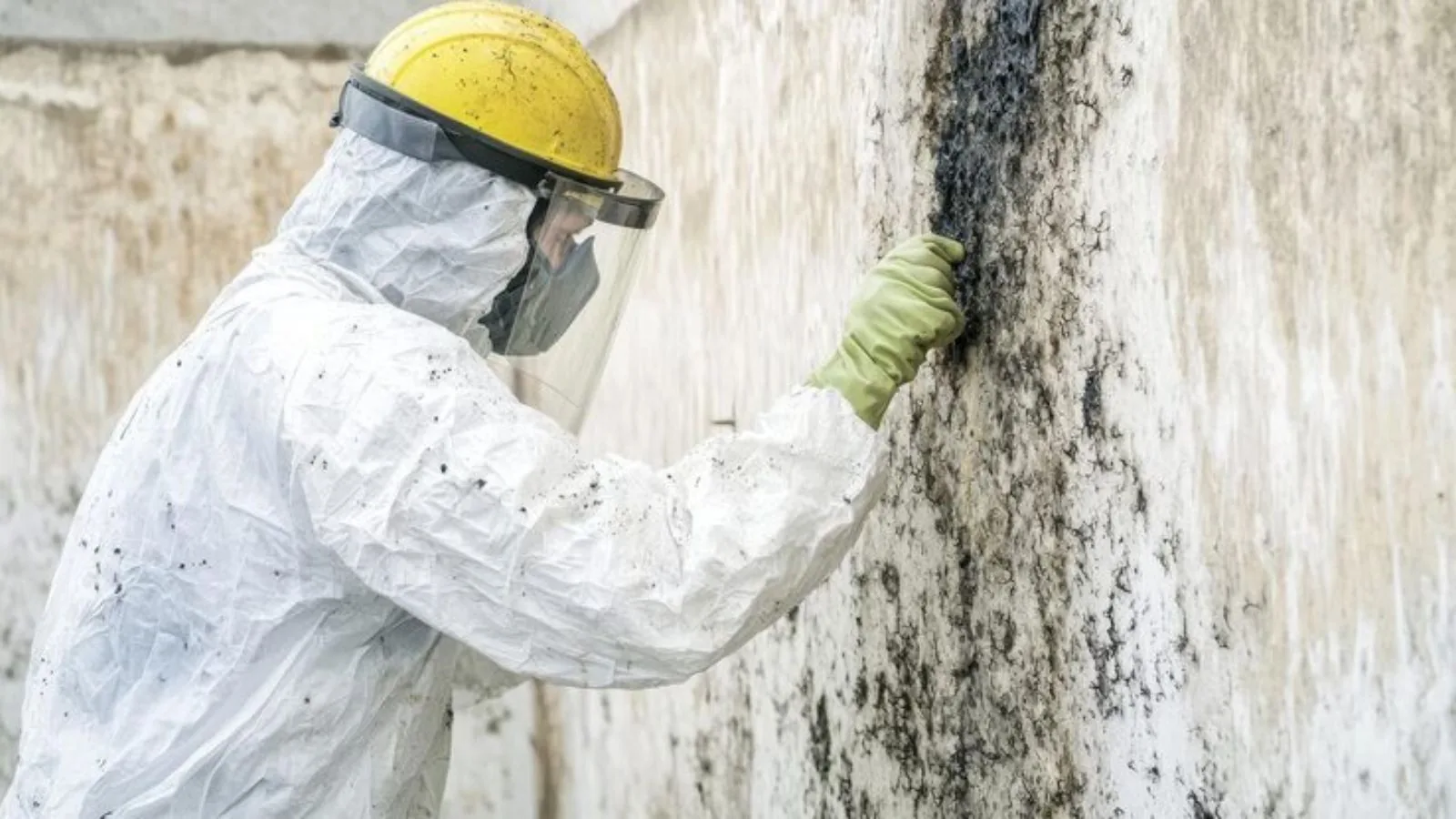
Dark spots, a musty smell or a stain that keeps coming back?
If you can see dark spots on a wall or ceiling, smell a musty odor in a closet or bathroom, or have a stain that returns after painting, you may be dealing with mold. The trade name for fixing it is mold remediation. In plain words, it means finding the water, drying the area, and removing mold growth in a way that does not spread it.
Mold needs moisture to grow, and the EPA says there are no federal limits for mold spores. The practical question is not whether spores exist, but whether something is wet. A visible patch larger than about 10 square feet is the point where the EPA suggests considering a professional.
Where mold usually starts
Closets and walls
Moisture trapped behind furniture or in exterior closets, often after a leak.
Bathrooms
Steam and a leaking tub or shower seal near the wall and ceiling corner.
AC condensate leaks
A clogged drain line wets a closet or ceiling. See AC leak water damage.
Past water damage
Any wall, ceiling or floor that got wet and was not dried in time.
Most mold calls trace back to a leak. A toilet overflow upstairs, a roof leak, a sink supply line, or a dishwasher drain can start the problem. The leak has to be fixed first, or mold returns. The structural drying page describes how the area is dried.
How mold remediation works
Assess
We inspect, take moisture readings and find the water source.
Contain
Plastic barriers, negative air and HEPA filtration keep spores from moving.
Remove
Porous materials with growth are removed, and surfaces are cleaned per S520 practice.
Dry and verify
The area is dried and checked. Clearance testing is an option.
ANSI/IICRC S520 is the published standard for mold remediation. Ask any company whether its crews work to it. Missouri licensing rules are worth checking too, so ask whether your state licenses mold work. We make no health claims. Questions about symptoms belong to a physician.
Mold in the house?
Call and describe it.
Testing, inspection and clearance
An assessment answers three questions: is it mold, how far has it spread, and what is wet? Some buyers, lenders and insurers also ask for independent clearance testing after remediation. Independent means a tester with no stake in the cleanup, which avoids a conflict of interest. We explain the options but make no promises about what a lender will accept.
How much notice is needed for an inspection? Call, describe the room and the leak, and dispatch tells you what the next available opening looks like. We do not promise arrival times.
Mold in a home sale or loan
If a buyer's lender will not fund until mold is removed, speed and documentation matter. Remediation records, moisture readings and clearance test results are what a lender or inspector usually asks to see. Whether a particular lender accepts them is the lender's decision.
Bathrooms, closets and walls
Bathrooms grow mold where the ceiling meets the wall, along tub caulk lines and behind toilets with slow leaks. Closets grow it on exterior walls and behind boxes pushed against drywall. In both cases the pattern is the same: surface moisture or a slow leak, little airflow, and time.
A patch you can wipe off a tile may be surface growth. A stain that returns after cleaning, or a spot on drywall that feels soft, means moisture is behind the paint.
What not to do with suspected mold
- Do not paint or caulk over it. The moisture is still there.
- Do not scrub it dry or sand it, which sends spores into the air.
- Do not run a fan across it or blow air into a closed wall.
- Do not tear out large sections without a plan for containment.
- Do fix the leak, reduce humidity and take photographs.
What affects the cost of mold remediation
Area affected
A closet corner and a whole wall are different scopes.
Materials
Drywall, insulation, carpet and wood each follow different removal steps.
Containment
Rooms that must be sealed need barriers and air filtration.
Moisture source
Fixing the leak and drying the area come first.
Testing
Clearance testing, if wanted, is a separate step.
Want your real number? Call (636) 747-8964. Scope and price are explained before work starts. We serve O'Fallon ZIP codes 63366 and 63368, plus nearby towns.
Insurance and related pages
Mold coverage is often limited or excluded, and gradual leaks are often not covered. Check your policy or ask your insurer. If mold followed a wet wall, read wall and drywall repair. For soaked carpet, see carpet water damage restoration.
Mold Remediation questions
How do I know if I have mold?
Visible dark growth or a persistent musty smell near a past leak are the usual signs. A professional assessment confirms it.
What do I do about mold after a leak?
Fix the leak, dry the area and call for an assessment. Avoid disturbing it, and do not paint over it.
Can you do independent clearance testing?
Clearance testing is done by an independent tester, which keeps results unbiased. We explain how it fits the process.
Will mold remediation guarantee it never returns?
No one can promise that. If moisture comes back, mold can too. Fixing the source is the protection.
My lender requires mold removal before closing. Can you help?
We provide documentation of the work. Whether a lender accepts it is up to the lender.