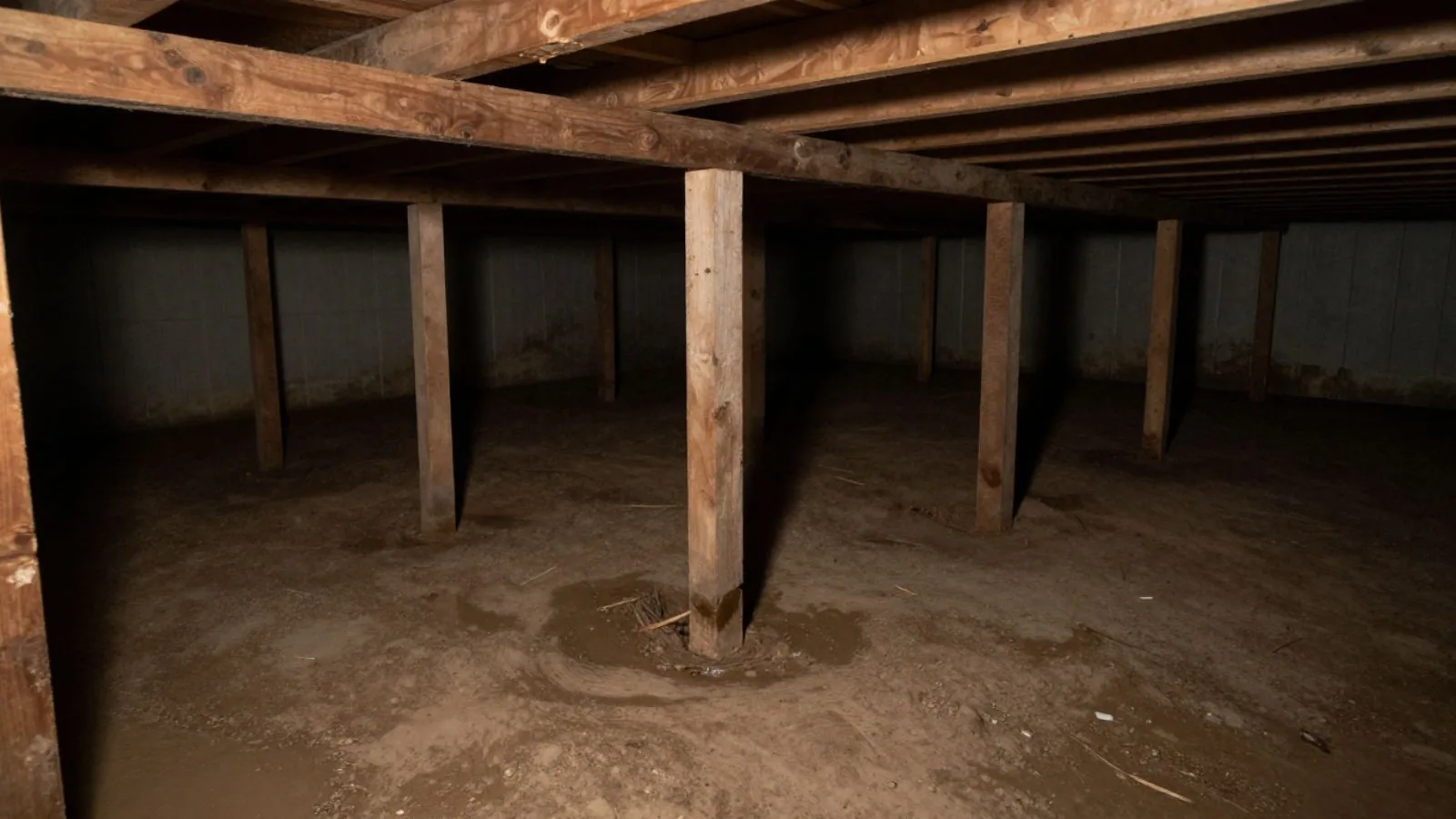
Crawl space water damage is the water, dampness and moisture that collects in the low void under a floor. It comes from a plumbing leak above, groundwater after heavy rain, or humid air that condenses on cool surfaces. We pump standing water, remove wet insulation, dry framing and record moisture so the floor above is not left to rot.
Signs of a wet crawl space
Musty smell indoors
Odors rise through floor gaps and vents into living space.
Cupped or soft floors
Moisture from below makes boards swell, and the floor can feel spongy.
Sagging insulation
Wet batts fall off the joists and stop insulating.
Standing water or damp soil
Check from the hatch. Stains on the foundation show where water has been.
We do not quote how common crawl spaces are in O'Fallon, because the housing data does not give a firm figure. Check your own home inspection report, or look for an access hatch in a closet floor, a garage or a side wall. If your house is on a slab or over a basement, see slab leak water damage or basement water damage cleanup instead.
Where crawl space water comes from
| Source | How it shows up | First step |
|---|---|---|
| Plumbing leak overhead | Dripping pipe, wet insulation below one room | Shut off the water and call a plumber. |
| Heavy rain and groundwater | Standing water after storms, wet soil | Check gutters and downspouts, call for extraction. |
| Humid air and condensation | Damp joists, musty smell, no standing water | Dry the space and ask about vapor control. |
| AC condensate line | Water under the air handler | See AC leak water damage. |
Groundwater has the bigger footprint under a house. After several days of rain, saturated soil pushes water toward foundation walls and into any low void it can reach, and a grade that slopes toward the house makes it worse. The City of O'Fallon Engineering office regulates the 100-year floodplain, so ask whether your lot is in it.
How we dry a crawl space
Pump
A submersible pump removes standing water from the lowest point.
Remove wet insulation
Saturated batts and any loose vapor sheeting are removed and bagged.
Dry the framing
Air movers and a dehumidifier run until joists and subfloor reach dry readings.
Document
We record moisture readings before and after so the floor above can be closed and repaired.
Crawl spaces are tight. The crew works low, with protective gear, and avoids stirring contaminated dust if water has been there a while. If the water came from a sewer line, treat it as Category 3 and read sewage backup cleanup.
Standing water under your floor?
Call the line and tell us what you see.
Mold and wood in a wet crawl space
The EPA says mold needs moisture and that drying wet material within 24 to 48 hours helps prevent growth. In a crawl space, wood framing stays damp longer because air barely moves. If a musty smell has been present for weeks, the mold remediation page explains inspection and containment.
Drying treats the damage that exists. Preventing a repeat means fixing the water source, improving drainage away from the foundation and asking a contractor about vapor control. Those steps are outside restoration and we say so honestly.
Vents, vapor and what we can and cannot fix
Foundation vents let outside air in, and in humid weather that air can add moisture rather than remove it. Whether to seal or open vents is a building-science question, and contractors disagree. We dry the space, tell you what we see, and leave the long-term design to a contractor who works on crawl spaces.
A vapor sheet on the soil limits evaporation from the ground. If yours is torn or missing, a contractor can replace it once the space is dry. Doing it while wet traps water.
What affects the cost
Water depth and area
A wet corner and a flooded void are different pump and labor jobs.
Insulation and vapor sheeting
Removal and disposal depend on how much is wet.
Access
A small hatch slows every task, and low clearance adds time.
Drying days
Soil and framing dry slowly, so equipment may run for several days.
Want your real number? Call (636) 747-8964. Scope and price are explained before work starts. A typical homeowners policy often covers sudden plumbing leaks, while groundwater seepage is often excluded, so check your policy or ask your insurer.
Safety steps before anyone goes under the house
- Do not enter a crawl space with standing water if wiring, a heat pump or a water heater sits low to the ground.
- Wear a respirator, gloves and knee protection, and carry a light, since the space is cramped.
- Watch for sharp debris, nails and animals.
- Tell someone before you go in and keep your phone on you.
- Photograph from the access hatch first.
According to EPA guidance, indoor humidity should be held below 60 percent, and a wet crawl space feeds the air in the house above it.
Crawl spaces in Historic Downtown
Older foundations near Main Street often have vented crawl spaces. See Historic Downtown O'Fallon for how age changes the leak.
Crawl Space Water Damage questions
How do I know if my crawl space has water damage?
Look for a musty smell, cupped floors, sagging insulation, damp soil or stains on the foundation. A moisture meter on the joists gives a number.
Can you dry a crawl space without removing the insulation?
Only if it is dry or lightly damp. Saturated batts hold water against the wood and are usually removed.
Is crawl space water dangerous?
It can be if it carries sewage or has been present for weeks. Treat unknown water with protective gear and ask for help.
Does waterproofing come with restoration?
No. Restoration dries and repairs the damage. Drainage and foundation sealing are different trades.
Do you work at night on crawl space water?
Dispatch is open 24/7. Active water entering a crawl space after a storm is worth a call at any hour.