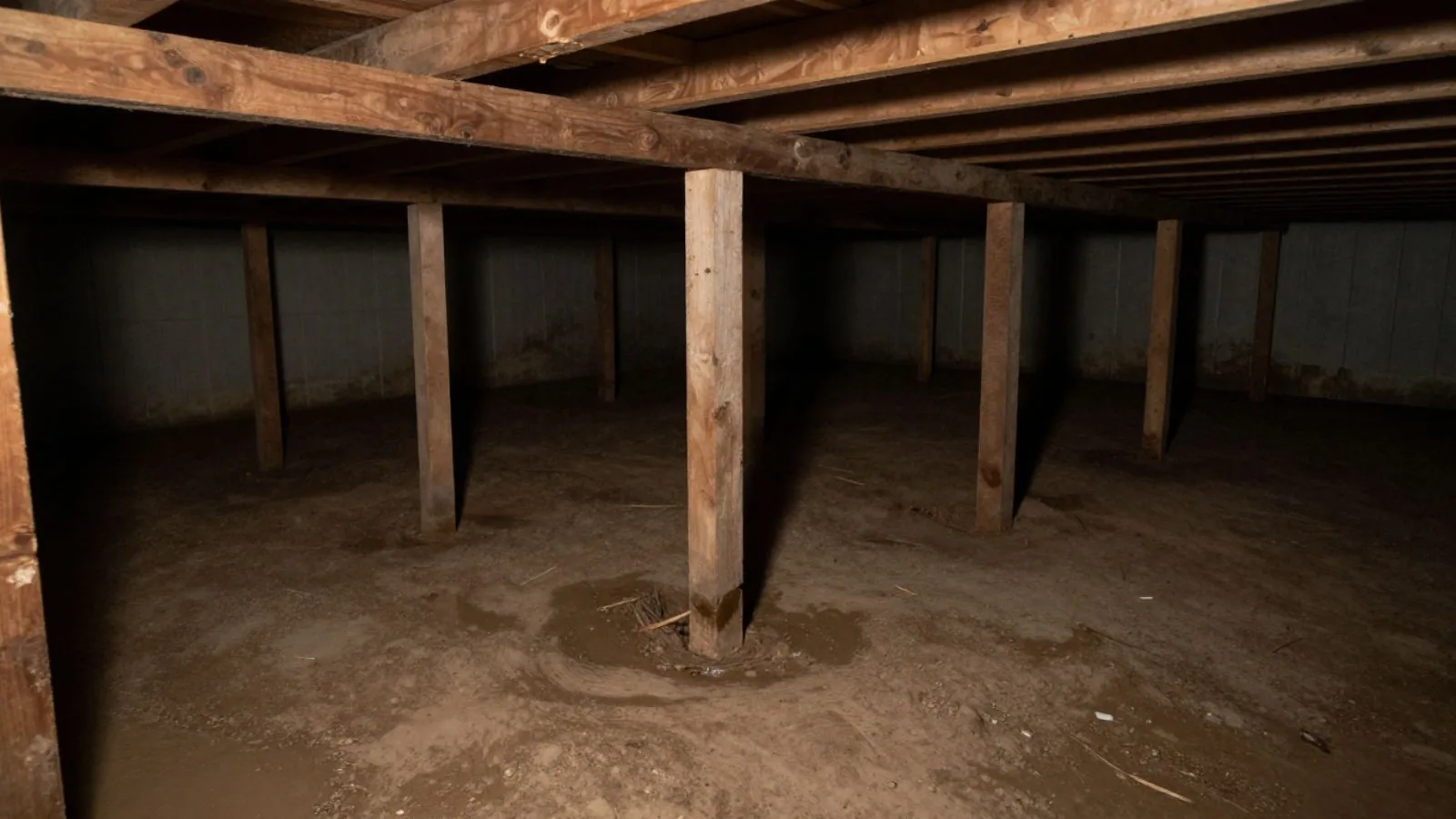
You dried the floor, ran the fans and cleaned up, yet the smell remains. A musty odor after water damage is common, and it usually means moisture is still trapped somewhere. Air fresheners and candles only cover the smell. The lasting fix is to find and dry the source.
Where musty smells come from
The odor often comes from damp organic material, such as wood, drywall paper, carpet pad or cardboard. Microbes feed on these when they stay wet. The smell may also come from stale water in a drain trap or a crawl space with high humidity.
The EPA says mold needs moisture to grow and advises drying wet materials within 24 to 48 hours. If a smell appears days after a leak, the drying may not have reached every layer.
| Where you smell it | Common cause | First check |
|---|---|---|
| Basement or lower level | Damp concrete, wet insulation, poor ventilation | Humidity reading and a look at corners and the base of walls. |
| Closet on an outside wall | Moisture in the wall cavity | Moisture meter on the wall. |
| Under carpet | Wet pad that never dried | Lift a corner and check the pad and tack strip. |
| Near a bathroom or kitchen | Leak behind a fixture or in a cabinet | Inspect under sinks and around tubs. |
| Near vents | Condensation or a clogged AC drain | See AC leak water damage. |
Steps you can take
Find the wet spot
Check corners, closets, under sinks and behind furniture for damp or stained areas.
Measure humidity
A hygrometer shows indoor humidity. According to the EPA, aim for 30 to 60 percent.
Dry and ventilate
Run dehumidifiers, open the space where safe and move furniture off walls.
Remove what will not dry
Soaked carpet pad, insulation and drywall often need to come out.
If you have only a smell and no visible stain, a professional moisture assessment can find what the eye cannot. Meters read inside walls and floors, and thermal cameras show cool, wet areas. That is faster than cutting random holes.
When it may be more than a damp spot
A strong smell with a visible patch, a spreading stain or any contact with sewage deserves a closer look. Sewage smells are different from musty ones and call for protective gear and removal of contaminated material.
If the odor follows a drain backup, see sewage backup cleanup. If you see growth, our guide to mold remediation explains the assessment and removal process. We make no health claims. If a smell bothers someone in your home, a physician is the right person to ask.
Habits that help
- Run bathroom fans during and after showers.
- Keep gutters clear and downspouts pointed away from the foundation.
- Fix leaks right away, even small ones.
- Keep a dehumidifier in damp basements and empty it often.
- Leave space between furniture and exterior walls.
Smells that point somewhere else
Not every odd smell is mold. A rotten egg smell from a drain suggests a dry trap or a venting problem. A sweet smell near the furnace could be a gas leak and should be treated as an emergency. If you smell gas, leave the house and call your gas utility from outside.
A sharp smell after a flood may be contaminated water. Sewage odors call for protective gear and removal of affected materials.
Pet, smoke and cooking odors
Odors that settle into carpet, drapes and soft furnishings can be mistaken for musty smells. Cleaning those materials and improving ventilation may help. If the smell persists in one spot only, the source is probably local, such as a spill or a damp pad.
Take a systematic approach. Close off a room and smell it at different times of day. Check humidity in the room. Move furniture and look behind it.
- Pour water into rarely used floor drains to refill traps.
- Run exhaust fans in bathrooms and kitchens.
- Check under sinks and behind appliances.
- Vacuum with a HEPA filter after drying carpet.
- Replace air filters regularly.
When to bring in a professional
If you have dried what you can and the smell remains, hidden moisture is the likely cause. A professional can use meters and a thermal camera to check walls, floors and ceilings without cutting holes at random. They can also check the air and look in places you cannot reach.
Describe when the smell appears, such as after rain, in the morning or when the air conditioner runs. Those clues help narrow the source.
Our pages on basement water damage cleanup and structural drying describe the next steps if hidden water turns out to be the cause.
Humid summers and drains in O'Fallon
The St. Louis region has warm, humid summers, and the National Weather Service St. Louis office publishes forecasts with dew point and humidity. On muggy days a basement with weak ventilation can feel clammy even without a leak.
A dry drain trap can also let sewer odor into a room, which is easy to mistake for a musty smell. The City of O'Fallon Water and Sewer department administers a Sewer Lateral Insurance Program, a useful contact if you suspect a problem on the line to the main. We serve O'Fallon and nearby towns, including Defiance and Moscow Mills.
Questions we hear
Can high humidity alone cause a musty smell in an O'Fallon basement?
Yes. Humid St. Louis-area summers can leave a poorly ventilated basement damp. A dehumidifier and a humidity reading help show whether it is air or a leak.
Will a dehumidifier remove the smell?
It lowers humidity and can help, but it will not remove a wet material that is the source.
How long does a musty smell last after a leak?
It can linger until the wet material is dried or removed.
Is a musty smell always mold?
Not always. It can come from damp materials or drains. Moisture readings and a visual check help.
Do I need to leave the house?
Usually not for a mild smell. For sewage or heavy growth, ask a professional for guidance.